- Empty cart.
- Continue Shopping



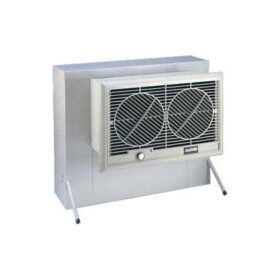
Greenhouse Evaporative Cooler — Slim Wall or Window Mount Swamp Cooler
-33%

Greenhouse Evaporative Cooler — Slim Wall or Window Mount Swamp Cooler
$554.40Current price is: $554.40. Original price was: $824.99.
Maintaining the right temperature in your greenhouse is crucial for plant health and productivity. The Greenhouse Evaporative Cooler offers a reliable solution to combat heat stress, ensuring your plants receive the ideal conditions for growth.
Cool your greenhouse naturally, without the running costs of air-con. This slim greenhouse evaporative cooler draws hot air through a wet pad to drop the temperature and add humidity — perfect for protecting plants on hot, dry Australian days. Its ultra-slim cabinet fits where bulkier coolers can’t, mounting through a wall or window with ease. A 2-speed motor, six-position switch and twin 360° multidirectional grilles let you direct cool air exactly where it’s needed, while the powerful LSP-93 sump pump keeps the pads saturated. Energy-efficient, quiet and easy to maintain.
y
Add to cart
Guaranteed Safe Checkout

Free
Worldwide Shopping
100%
Guaranteed Satisfaction
30 Day
Guaranteed Money Back
Greenhouse Evaporative Cooler — Slim Wall or Window Mount
The greenhouse evaporative cooler drops air temperature by pulling hot, dry air through saturated pads. No compressor, no refrigerant, and a fraction of the power draw of refrigerated air conditioning.
Its ultra-slim cabinet mounts through a wall or window opening where a conventional cooler will not fit, covering roughly 9 to 37 square metres of growing space.
How Evaporative Cooling Works
A sump pump keeps the pads wet. A two-speed fan draws hot air through them. Water evaporating off the pad surface absorbs heat, and cooler, more humid air enters the greenhouse.
Cooling depth depends on wet-bulb depression, the gap between air temperature and wet-bulb temperature. The drier the incoming air, the larger the temperature drop.
For plants, both halves of that trade are useful. Heat stress eases, and the added humidity reduces transpiration demand through the hottest part of the afternoon.
Where It Works, and Where It Does Not
Inland and southern Australian summers run hot and dry. That is precisely the condition this cooling method was built for.
In humid coastal and subtropical regions the incoming air already carries moisture, so less can evaporate and the temperature drop is smaller. Shade cloth and powered exhaust ventilation carry more of the load there.
A greenhouse evaporative cooler is still worth running on your driest days in those regions. It should not be the only cooling measure.
Exhaust Ventilation Is Not Optional
A greenhouse evaporative cooler pushes air in. If that air cannot escape, static pressure builds, airflow through the pads collapses, and cooling effectively stops.
Keep a roof vent, louvre or opposing door open whenever it runs. Size the exhaust opening to roughly match the discharge area.
This single point accounts for most disappointing results with evaporative cooling in sealed structures.
Specifications
- Type: Evaporative swamp cooler — wall or window mount
- Motor: 1/8 hp, two-speed
- Controls: Six-position rotary switch
- Grilles: Twin 360° multidirectional
- Pump: LSP-93 sump pump
- Coverage: Approx. 9–37m² (100–400 sq ft)
- Cabinet: 67.6cm H × 79.1cm W × 22.9cm D
- Duct: 33.7cm H × 52.7cm W × 26cm D
- Blower wheels: Plastic, for quieter running
- Cord: Approx. 1.8m, grounded
- Power supply:
Sizing and Maintenance
How much a greenhouse evaporative cooler delivers depends on the structure. Treat the lower end of the coverage range as realistic if it is unshaded, has a high roof, or takes full afternoon sun.
Check the sump water level daily in hot weather. Flush it periodically, because hard water leaves scale on the pads and inside the pump.
Replace pads when they harden, discolour, or start channelling water down one section instead of wetting evenly. Drain the unit fully at the end of the season.
Browse the greenhouse cooling range, and pair this greenhouse evaporative cooler with shade cloth, a circulation fan and an automatic vent opener for a layered setup. Background on the underlying physics is documented at Wikipedia, and Australian home cooling guidance is published by the Australian Government.
SHORT DESCRIPTION (above Add to Cart)
Greenhouse evaporative cooler with an ultra-slim cabinet for wall or window mounting. Covers roughly 9–37m². Two-speed 1/8 hp motor, six-position rotary switch, twin 360° multidirectional grilles and an LSP-93 sump pump. Cools by drawing hot air through wet pads — best performance in hot, dry conditions. Requires an open vent or door for exhaust airflow.
💬 Before You Go — Cooling a Greenhouse Through an Australian Summer?
Running an evaporative cooler in your greenhouse? Leave a review with your structure type, glazing, floor area and region — and tell us what temperature drop you actually see. Real-world performance data by climate zone is far more useful to other growers than a rated coverage figure. And if you’re in a humid region and this isn’t the right tool, tell us what you ended up using instead. 🌱
Evaporative cooling raises humidity as well as lowering temperature. Maintain air circulation and ventilation to reduce the risk of fungal disease in enclosed growing environments. Electrical appliances must be installed in accordance with Australian wiring rules — confirm the voltage rating of your unit before connection and use a licensed electrician for any hardwired installation. Verify all dimensions against your opening before ordering.
Frequently Asked Questions
How many degrees will an evaporative cooler drop the temperature in my greenhouse?
It depends on how dry the incoming air is. Cooling is driven by wet-bulb depression — the gap between air temperature and wet-bulb temperature. On a hot, low-humidity day the drop is substantial. On a humid day it is much smaller. Check your local summer afternoon humidity before setting expectations.
Does an evaporative cooler need ventilation to work?
Yes, and this is the most common installation mistake. The unit blows air in, so an equivalent volume has to escape. Keep a roof vent, louvre or opposing door open while it runs. Without an exhaust path, static pressure builds, airflow through the pads collapses and cooling largely stops.
Will the extra humidity cause fungal problems on my plants?
It can, particularly if humidity stays high overnight with no air movement. Botrytis and powdery mildew both favour still, humid conditions. Run circulation fans alongside the cooler, keep vents open, and avoid running it into the evening once temperatures are already falling.
How big a greenhouse will this cool?
It is rated for roughly 9–37m². Assume the lower figure if your greenhouse is unshaded, has a high roof line, or takes full afternoon sun — floor area alone understates the air volume you are actually cooling.
Does it need a plumbed water connection?
The sump has to stay filled while the unit runs, which means either a plumbed connection with a float valve or a manual refill routine. Site it where you can reach the sump. Contact us to confirm the connection type on your unit.
What is the difference between an evaporative cooler and an exhaust fan?
An exhaust fan removes hot air and replaces it with outside air, so the best it can do is bring you to ambient temperature. An evaporative cooler actively cools air below ambient. Most greenhouses benefit from both — the fan handles air exchange, the cooler handles temperature.
How often do the cooling pads need replacing?
There is no fixed interval. Replace them when they harden, discolour, or when water starts channelling down one section instead of wetting the pad evenly. Hard water shortens pad life considerably, so periodic flushing helps.
Is it cheaper to run than air conditioning?
Yes. It runs a fan and a small pump rather than a compressor, so electrical draw is far lower. Factor water consumption into the running cost as well, particularly under water restrictions.
Can I run it on a thermostat or timer?
A thermostat or timer lets the cooler respond to temperature automatically rather than running continuously. Check compatibility with the six-position rotary switch before ordering a controller.
Does it work in humid coastal areas like Brisbane or Cairns?
Less effectively. Evaporative cooling depends on dry incoming air. In humid subtropical regions, prioritise shade cloth and powered exhaust ventilation, and treat evaporative cooling as a supplement on drier days rather than your primary cooling method.
Related products
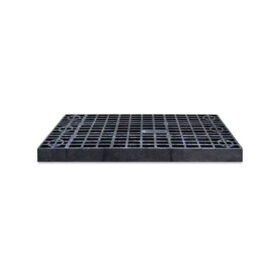
Individual Benchmaster Shelf
Price range: $55.17 through $402.30

Dura-Bench Plastic Benchtop
$175.00
Benchmaster Sign Kit
$144.84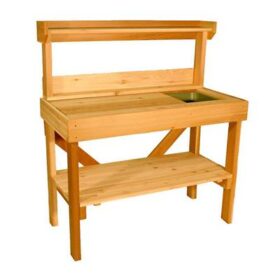
Aquila Red Cedar Potting Bench
$570.00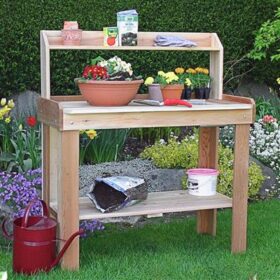

Western Red Cedar Potting Bench
$438.00
Reviews
There are no reviews yet.